


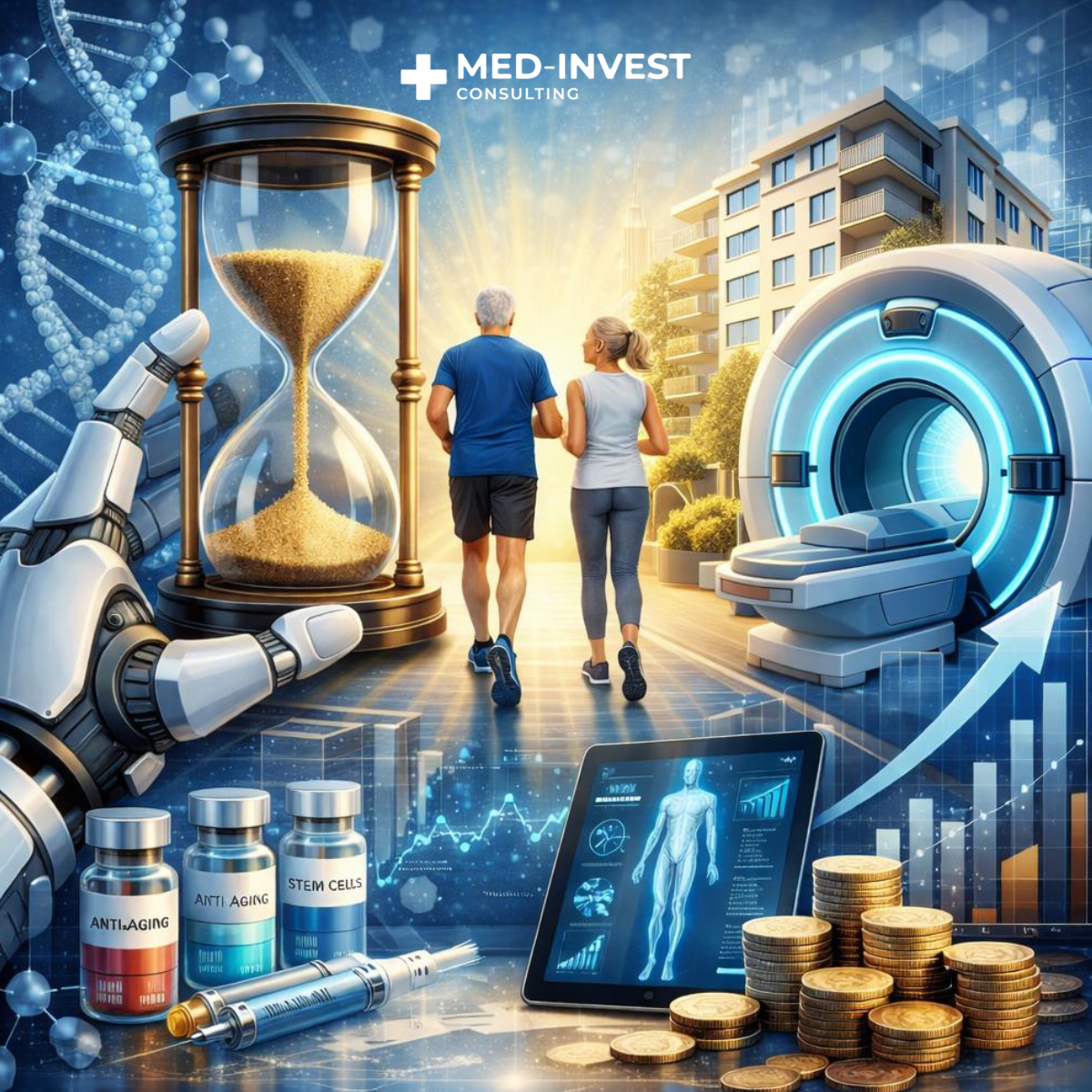
Longevity is a new paradigm in healthcare, reshaping the way we think about aging, senior care, and medical sector investments.
The average life expectancy in the European Union is around 81–82 years, but healthy life years remain shorter.
This creates increasing pressure on the healthcare system due to the costs of treating age-related diseases. By comparison, in Japan – a global leader in longevity – women live on average 87 years, and men 81. The healthcare system in this highly developed Asian country focuses not only on treating illnesses but also on maintaining seniors’ functionality and quality of life.
Increasingly, we are thinking about safeguarding health and quality of life for the “silver age.”
Key questions arise:
1. How can we extend healthy, independent life?
2. How can we design living and care spaces that promote well-being for older adults?
3. How can we safely invest financial resources to ensure a comfortable retirement?
Prevention starts with diagnostics, and effective prevention requires:
– diagnostic equipment, including ultrasound and highly specialized devices,
– health monitoring technologies,
– solutions that integrate diagnostics, treatment, and rehabilitation.
Modern equipment is the foundation of longevity.
A facility equipped with high-quality devices can diagnose faster, reduce costs, and support patients’ independence.
Investing in prevention and early diagnostics is now crucial.
Longevity is redefining investments. It is a development strategy for medical and care facilities, the healthcare sector, long-term investors, and companies creating solutions for an aging society.
Longevity focuses on healthy aging, prevention, and quality of life, as well as on spaces—places where people feel comfortable, safe, and independent.